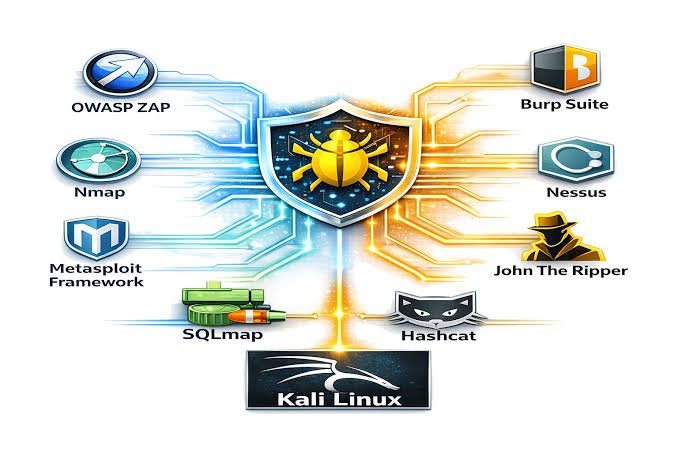
Web security testing requires the right tools to identify vulnerabilities, understand attack surfaces, and improve the security of web applications. Among the many security testing tools available, BeEF and Burp Suite are two popular names often discussed by penetration testers and cybersecurity professionals.
Although both tools are used during security assessments, they serve different purposes. BeEF focuses mainly on browser exploitation and testing client-side security weaknesses, while Burp Suite is a complete web application testing platform designed for analyzing, modifying, and testing HTTP communication.
Choosing between BeEF and Burp Suite depends on what you want to test. If your goal is browser-based exploitation research, BeEF provides specialized features. If you need a complete web security testing workflow, Burp Suite offers a much broader set of capabilities.
This guide explains the differences between BeEF and Burp Suite, their features, use cases, advantages, limitations, and which tool is more suitable for different security testing scenarios.
BeEF and Burp Suite: Quick Overview
Before comparing both tools, it is important to understand their main purpose.
What Is BeEF?
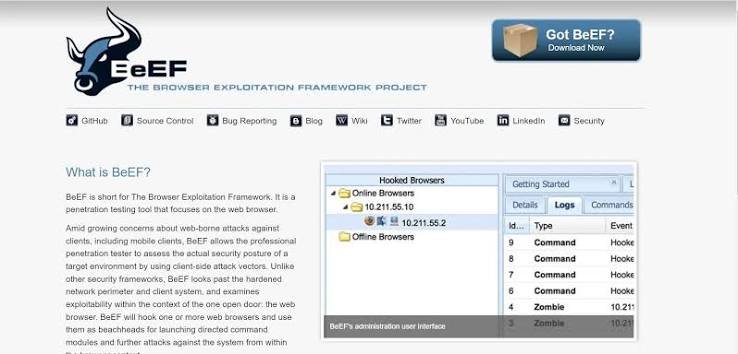
BeEF stands for Browser Exploitation Framework. It is an open-source security testing framework designed to demonstrate and analyze browser-based vulnerabilities.
Unlike traditional penetration testing tools that focus mainly on servers and networks, BeEF focuses on the browser as an attack surface. It works by using a browser hook, which allows security testers to analyze what actions can be performed through a compromised browser session.
BeEF is commonly used for:
- Browser security testing
- Client-side vulnerability research
- Cross-site scripting demonstrations
- Social engineering security assessments
- Understanding browser-based attack techniques
BeEF is mainly a specialized tool for testing browser security rather than a complete web application scanner.
What Is Burp Suite?
Burp Suite is a professional web security testing platform developed by PortSwigger. It is widely used by penetration testers, bug bounty hunters, and application security teams.
The tool works as an intercepting proxy between the browser and web application. This allows testers to capture, modify, replay, and analyze HTTP requests and responses.
Burp Suite is commonly used for:
- Finding web application vulnerabilities
- Testing authentication systems
- Analyzing API security
- Performing manual penetration testing
- Automated vulnerability scanning
- Bug bounty testing
Burp Suite provides a complete environment for web application security analysis.
BeEF vs Burp Suite: Main Difference
The biggest difference between BeEF and Burp Suite is their testing approach.
BeEF focuses on exploiting and analyzing the browser environment, while Burp Suite focuses on testing web applications and communication between the client and server.
| Feature | BeEF | Burp Suite |
|---|---|---|
| Main purpose | Browser exploitation testing | Web application security testing |
| Target | Web browsers and client-side weaknesses | Websites, APIs, and web applications |
| Type | Specialized framework | Complete security testing platform |
| Proxy testing | Limited | Advanced |
| Vulnerability scanning | Limited | Available in Professional edition |
| Manual testing | Basic | Extensive |
| API testing | Limited | Strong support |
| Beginner friendly | Requires security knowledge | Easier with learning resources |
| Common users | Security researchers | Pentesters and bug bounty hunters |
Read more: BeEF Framework Explained: How Browser Exploitation Really Works
BeEF Features and Capabilities
BeEF includes several features designed specifically for browser security testing.
Browser Hooking
The main feature of BeEF is browser hooking. A tester can connect a browser session to the BeEF framework and analyze possible security weaknesses.
This helps security professionals understand the risks associated with browser compromise.
Client-Side Attack Testing
BeEF allows testers to examine client-side attack scenarios, including:
- Browser information exposure
- Social engineering techniques
- Client-side vulnerabilities
- Browser-based security weaknesses
Command Modules
BeEF provides different command modules that can be executed against hooked browsers during authorized security assessments.
These modules help testers understand what actions may become possible after browser compromise.
Security Research Environment
Because BeEF is open source, researchers can study its modules and customize the framework according to their testing requirements.
Burp Suite Features and Capabilities
Burp Suite provides a much wider range of web security testing features.
Intercepting Proxy
The proxy is one of Burp Suite’s most important features. It allows testers to capture HTTP and HTTPS traffic between the browser and application.
Security testers can modify requests to identify vulnerabilities such as:
- Input validation problems
- Authentication weaknesses
- Access control issues
- Parameter manipulation flaws
Repeater Tool
Burp Repeater allows testers to manually modify and resend requests multiple times.
This is useful when analyzing how applications respond to different inputs.
For example, testers can change parameters, headers, cookies, or request methods to identify security issues.
Scanner
Burp Suite Professional includes automated scanning capabilities that help identify common web vulnerabilities.
The scanner can assist with finding issues related to:
- Cross-site scripting
- SQL injection
- Security misconfigurations
- Authentication problems
However, professional testers usually combine automated scanning with manual testing for better results.
Intruder
Burp Intruder helps automate customized attacks during authorized testing.
It can be used for tasks such as:
- Parameter testing
- Authentication testing
- Input fuzzing
- Discovering hidden application behavior
API Security Testing
Modern applications depend heavily on APIs. Burp Suite supports API testing by allowing testers to analyze API requests, responses, authentication methods, and data handling.
BeEF vs Burp Suite: Which One Is Better for Web Security Testing?
There is no single answer because both tools solve different problems.
For complete web application security testing, Burp Suite is generally more suitable because it provides a wider testing environment.
For browser exploitation research and client-side security analysis, BeEF offers specialized functionality that Burp Suite does not focus on.
The better choice depends on the testing objective.
When Should You Use BeEF?
BeEF is useful when your security assessment focuses on browser-related risks.
You may choose BeEF for:
Client-Side Security Research
If you are studying how browser vulnerabilities work, BeEF provides a practical testing environment.
Security Awareness Demonstrations
Security teams may use BeEF in controlled environments to demonstrate the risks of browser compromise.
Testing Browser-Based Attacks
When evaluating client-side weaknesses, BeEF can provide insights into possible browser exploitation scenarios.
However, BeEF should only be used in authorized environments because browser exploitation techniques can impact real users.
When Should You Use Burp Suite?
Burp Suite is commonly selected for professional web application penetration testing.
It is suitable for:
Bug Bounty Testing
Many bug bounty researchers use Burp Suite because it helps analyze web applications manually and discover security issues.
Web Application Audits
Companies use Burp Suite during security assessments to identify weaknesses before attackers find them.
API Testing
Applications using REST APIs, authentication tokens, and complex request systems can be tested effectively with Burp Suite.
Learning Web Security
Burp Suite is also popular among beginners because many cybersecurity training platforms use it for practical web security exercises.
BeEF vs Burp Suite: Ease of Use
Both tools require cybersecurity knowledge, but their learning paths are different.
BeEF can be challenging because understanding browser exploitation requires knowledge of:
- JavaScript
- Browser security models
- Client-side attacks
- Web vulnerabilities
Burp Suite may feel easier for beginners because its workflow is closer to normal web testing.
A beginner can start by learning:
- HTTP requests
- Cookies
- Headers
- Parameters
- Authentication flows
Then gradually move into advanced testing techniques.
BeEF vs Burp Suite for Beginners
For someone starting web security testing, Burp Suite is usually the better starting point.
Reasons include:
- More learning resources
- Wider industry usage
- More practical web testing features
- Better support for learning HTTP security concepts
BeEF is better approached after understanding basic web security concepts.
Can BeEF and Burp Suite Be Used Together?
Yes. Security professionals may use both tools during different stages of an assessment.
For example:
- A tester uses Burp Suite to analyze a web application.
- They identify possible client-side weaknesses.
- They use BeEF in a controlled environment to research browser-related risks.
Both tools can complement each other because they focus on different parts of web security.
Limitations of BeEF
Although BeEF is useful, it has limitations.
Limited Web Application Testing
BeEF is not designed to replace a complete web penetration testing platform.
It does not provide the same level of:
- Request analysis
- Automated scanning
- API testing
- Manual testing features
Requires Understanding of Browser Security
Without knowledge of browser vulnerabilities, users may find BeEF difficult to use effectively.
Controlled Usage Required
BeEF should only be used against systems where permission has been provided.
Limitations of Burp Suite
Burp Suite is powerful, but it also has limitations.
Professional Features Require Payment
The free edition provides useful features, but advanced capabilities are available mainly in Burp Suite Professional.
Requires Learning
Burp Suite has many features, and mastering them requires practice.
Automated Tools Are Not Perfect
Security scanners can miss vulnerabilities or produce false positives. Manual testing remains important.
Which Tool Is More Popular in Professional Security Testing?
Burp Suite has wider adoption among professional penetration testers, security consultants, and bug bounty researchers because it covers many areas of web application testing.
BeEF remains valuable as a specialized browser exploitation framework, especially for research, education, and client-side security analysis.
Popularity does not mean one tool replaces the other. Their purposes are different.
Final Verdict: BeEF or Burp Suite?
BeEF and Burp Suite are both valuable cybersecurity tools, but they are built for different goals.
Choose BeEF if you want to:
- Study browser exploitation
- Test client-side security weaknesses
- Research browser-based attacks
- Understand browser compromise scenarios
Choose Burp Suite if you want to:
- Perform web application penetration testing
- Test APIs
- Analyze HTTP traffic
- Find common web vulnerabilities
- Work on bug bounty programs
For most web security testers, Burp Suite is the more complete choice because it covers a wider range of testing activities. BeEF is best viewed as a specialized tool that adds value when browser security testing is required.
The strongest security testing approach is not choosing only one tool. Professional testers often combine multiple tools depending on the application, vulnerability type, and assessment goal.