Modern security testing cannot focus only on servers, firewalls, and exposed ports. Web browsers have become an important part of the attack surface because employees use them to access business applications, cloud services, internal portals, and sensitive information every day.
This is where a combination of BeEF and ThreatNG can provide a useful client-side security testing workflow. BeEF, short for Browser Exploitation Framework, is designed to assess browser-focused attack vectors, while ThreatNG provides external attack surface management, digital risk protection, and security-rating capabilities.
Used together in an authorized penetration test, the two tools can help security teams move from external discovery to controlled browser-security validation. The important point is that they serve different purposes. ThreatNG helps identify and contextualize external exposure, while BeEF can be used in a controlled laboratory or approved assessment to validate what browser-level weaknesses could mean in practice.
What Is BeEF?
BeEF is an open-source penetration-testing framework that focuses specifically on web browsers. Rather than concentrating primarily on operating-system vulnerabilities or network services, BeEF examines security weaknesses from the client-side browser perspective.
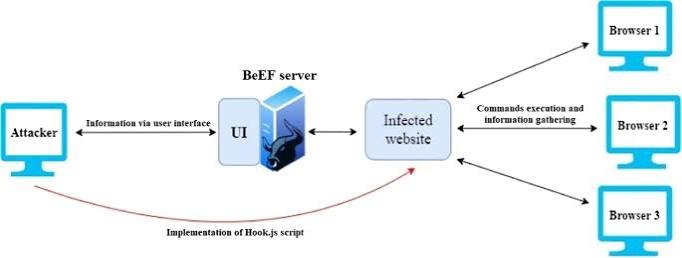
Its architecture includes a user interface, communication server, hooked-browser management, and modular command functionality. A browser participating in an authorized test can be assessed through selected modules that are appropriate for the browser and testing objective.
This makes BeEF particularly useful when a security team needs to understand the practical impact of a client-side vulnerability.
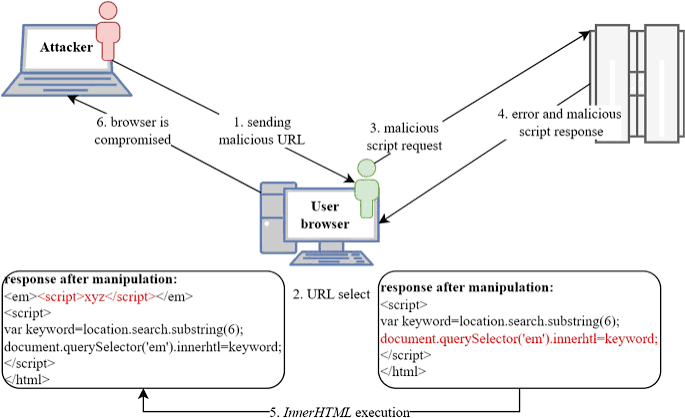
For example, discovering a cross-site scripting weakness is important, but understanding whether that weakness could expose browser sessions, sensitive application context, or other client-side risks can provide additional information for remediation.
BeEF should therefore be treated as a controlled validation framework rather than a general-purpose hacking tool.
What Is ThreatNG?
ThreatNG is an External Attack Surface Management and Digital Risk Protection platform that performs external, unauthenticated discovery and assessment. Its capabilities include digital asset discovery, vulnerability assessment, security ratings, cloud and SaaS exposure monitoring, and other external-risk functions.
The platform is designed to help organizations understand what is visible from outside their environment. This can include domains, subdomains, cloud infrastructure, applications, certificates, exposed services, and other digital assets.
That perspective is valuable because organizations often have assets that security teams did not originally intend to expose. Development environments, forgotten subdomains, old applications, third-party services, and abandoned infrastructure can all contribute to an expanding attack surface.
ThreatNG can therefore provide the discovery and prioritization layer before a deeper client-side security assessment begins.
Why Combine BeEF and ThreatNG?
The main benefit of combining BeEF and ThreatNG is not that one tool makes the other more powerful. The benefit comes from connecting two different stages of security assessment.
ThreatNG can help answer:
- What assets are exposed?
- Which domains and subdomains are associated with the organization?
- Which external weaknesses deserve attention?
- Where are security controls potentially missing?
- Which assets have the greatest external risk?
BeEF can help answer a different question:
What could a browser-based weakness mean when tested under controlled conditions?
This creates a useful workflow:
Discover → Prioritize → Validate → Document → Remediate → Monitor
ThreatNG provides external context, while BeEF can provide browser-focused validation where the engagement permits it. ThreatNG itself describes its platform as complementary to penetration-testing and exploitation frameworks, supporting reconnaissance, vulnerability assessment, reporting, and continuous monitoring.
Step 1: Define the Testing Scope
Before using either platform, establish written authorization.
Client-side testing can affect real users, browser sessions, applications, and internal services. A poorly scoped assessment can create unnecessary operational or privacy risks.
The scope should identify:
- Approved domains and subdomains
- Authorized applications
- Test accounts
- Approved browsers
- Testing dates and times
- Permitted techniques
- Data-handling requirements
- Emergency contacts
- Prohibited actions
- Evidence and reporting requirements
A dedicated test environment is preferable whenever possible.
The objective should also be clearly defined. For example, a test might evaluate whether browser security controls adequately mitigate a known client-side weakness rather than attempting to obtain real credentials or access unrelated internal systems.
Step 2: Discover the External Attack Surface
The next stage is external discovery.
ThreatNG can provide visibility into an organization’s internet-facing footprint through external discovery and assessment capabilities. The platform describes functions such as domain intelligence, asset inventory, cloud exposure, application discovery, and external vulnerability assessment.
This stage is important because testing the wrong asset produces little useful information.
A security team might discover an older subdomain, a staging application, or an externally accessible service that was not included in the original asset inventory.
Instead of immediately testing everything, organize discovered assets by business importance and technical relevance.
For example:
High priority: customer-facing production applications
Medium priority: employee portals and business applications
Lower priority: approved test and development environments
This prioritization reduces unnecessary testing and helps security teams concentrate on meaningful exposure.
Step 3: Examine Browser-Relevant Security Controls
Once relevant applications are identified, examine the controls that influence browser security.
Important areas can include:
- Content Security Policy
- HTTP Strict Transport Security
- Secure cookie attributes
- SameSite cookie settings
- Frame protection
- Cross-origin controls
- Input validation
- Output encoding
- Authentication controls
- Session management
- Third-party JavaScript
- Security headers
A missing control does not automatically mean that an application is exploitable. Context matters.
For example, a Content Security Policy can provide an important browser-side defense against certain script-injection scenarios, but its effectiveness depends on how the policy is configured and how the application handles untrusted input.
This is where external findings should be treated as leads for validation rather than automatic proof of compromise.
Step 4: Build a Controlled BeEF Test
After identifying an appropriate and authorized test case, BeEF can be introduced into a controlled environment.
The BeEF documentation explains that its browser hook is JavaScript-based and that the browser must be able to establish a connection with the BeEF server. Modern HTTPS environments also create additional requirements around secure transport and trusted certificates.
For a professional assessment, the safest approach is to use a dedicated browser, test account, isolated application, and clearly identified test page.
Do not place a BeEF hook into an unsuspecting user’s browser or use the framework against systems outside the written scope.
The purpose of the test should be to determine whether a previously identified weakness can produce a measurable security impact.
Step 5: Validate the Security Finding
A successful browser test should answer a specific security question.
For example:
- Can an identified client-side weakness execute unauthorized script?
- Does the application’s security policy prevent the expected behavior?
- Are session protections configured correctly?
- Does browser isolation limit the impact?
- Does the security monitoring system detect the activity?
- Can the organization identify the affected application quickly?
BeEF uses modules to provide different types of browser-focused testing functionality. Its architecture separates module configuration, browser-side JavaScript, and backend Ruby functionality.
Security teams should select only modules necessary for the approved test objective.
Avoid collecting real credentials, private messages, personal files, or unrelated browser information merely because a testing module makes it technically possible.
Step 6: Compare the Results With ThreatNG Findings
This is where the combined workflow becomes particularly useful.
Suppose ThreatNG identifies an externally exposed application with weak browser-security controls. A controlled BeEF assessment can then determine whether the suspected weakness has meaningful client-side consequences.
The result can be categorized as:
External exposure only: The weakness is visible but no practical client-side impact was demonstrated.
Validated weakness: The controlled test reproduced the expected browser-side behavior.
Significant client-side risk: The weakness demonstrated a realistic impact involving sensitive application functionality or security controls.
Mitigated: The expected attack behavior was blocked by effective browser or application defenses.
This distinction prevents security teams from treating every scanner finding as an equally serious vulnerability.
Step 7: Test Detection and Response
Client-side security testing should not stop after technical validation.
A mature assessment should also examine whether defensive systems noticed the activity.
Security teams can review:
- Web application logs
- Web application firewall events
- Endpoint telemetry
- Browser security events
- DNS monitoring
- Proxy logs
- SIEM alerts
- Identity-provider activity
- Incident-response workflows
The question is simple:
If this activity occurred during a real attack, would the security team notice it?
ThreatNG can provide external-risk context, while internal monitoring systems can show whether the organization detected the simulated activity.
This makes the assessment more valuable than a simple vulnerability scan.
Step 8: Document Evidence Carefully
Every validated finding should contain enough evidence for another security professional to understand what happened.
A useful report should include:
- Affected asset
- Testing date
- Testing environment
- Vulnerability description
- External evidence
- Controlled validation result
- Business impact
- Security controls involved
- Detection result
- Recommended remediation
- Retest requirements
Do not include unnecessary sensitive information.
Screenshots, timestamps, sanitized logs, and test identifiers are usually more useful than collecting raw private data.
The goal is to prove the security issue, not to retain information that the tester does not need.
Common Mistakes to Avoid
Testing Without Authorization
BeEF can interact directly with browsers, so unauthorized testing can quickly become intrusive. Only test assets and users explicitly included in the engagement.
Treating Scanner Findings as Confirmed Exploits
An external security rating is not automatically proof that an application can be compromised. Validate findings carefully and within scope.
Using Real User Accounts
Dedicated test accounts provide a safer way to evaluate application behavior. Real employee or customer accounts can introduce unnecessary privacy and operational risks.
Collecting Excessive Data
Security testing should follow data-minimization principles. Collect only the evidence needed to demonstrate the finding.
Ignoring Modern Browser Protections
Browser security has changed considerably. Sandboxing, site isolation, content security policies, cookie protections, and other controls can limit the effectiveness of older techniques.
The BeEF project itself notes that module compatibility depends on the target browser and operating-system context.
Failing to Retest
A vulnerability report is not the end of the process. After remediation, repeat the relevant test and confirm that the expected behavior is now blocked.
BeEF + ThreatNG Workflow at a Glance
A practical workflow can be summarized as:
1. Scope: Define authorization and testing boundaries.
2. Discover: Use ThreatNG to understand the external attack surface.
3. Prioritize: Identify applications where client-side exposure deserves deeper investigation.
4. Assess: Review browser-facing security controls and application behavior.
5. Validate: Use BeEF only within an approved, controlled test environment.
6. Monitor: Check whether defensive technologies detect the simulated activity.
7. Report: Document evidence, impact, and remediation.
8. Fix: Strengthen the affected application or security controls.
9. Retest: Confirm that remediation works.
10. Monitor continuously: Use external attack-surface monitoring to identify new exposure as the environment changes.
This workflow aligns discovery with practical validation instead of treating security tools as isolated products.
How Organizations Can Improve Client-Side Security
The most effective defense is layered.
Organizations should maintain an accurate inventory of internet-facing assets, remove unnecessary exposure, keep browsers and applications updated, enforce strong session controls, and use appropriate security headers.
Content Security Policy should be carefully designed rather than copied from a generic template. Cookies containing sensitive session information should use appropriate security attributes. Authentication should use strong controls such as multi-factor authentication where appropriate.
Organizations should also review third-party JavaScript because external dependencies can introduce client-side risk.
Security monitoring matters as well. Browser-focused attacks can cross boundaries between web applications, users, identity systems, and internal infrastructure. A security program should therefore connect application security, endpoint monitoring, identity protection, and external attack-surface management.
ThreatNG’s continuous-security approach emphasizes ongoing discovery and monitoring because external exposure can change as organizations add domains, cloud services, applications, and third-party technologies.
Final Checklist for a BeEF + ThreatNG Assessment
Before closing a client-side security assessment, confirm that:
- The testing scope was approved.
- All tested assets were authorized.
- A dedicated testing environment was used where practical.
- External assets were identified before validation.
- Browser-security controls were reviewed.
- Only necessary BeEF functionality was used.
- No unnecessary sensitive information was collected.
- Security monitoring was evaluated.
- Findings were documented with evidence.
- Remediation recommendations were provided.
- Fixed issues were retested.
- External monitoring remains enabled.
This checklist keeps the assessment focused on measurable security improvement rather than simply demonstrating offensive capability.
Conclusion
BeEF + ThreatNG can form a useful workflow for organizations that need to understand client-side security from both external and browser-level perspectives. ThreatNG helps map and contextualize the external attack surface, while BeEF provides a framework for controlled browser-focused validation.
The real value comes from connecting the two stages. Discovery identifies where attention is needed, controlled validation establishes whether a weakness has practical impact, monitoring shows whether defensive systems can detect the activity, and remediation reduces the underlying risk.
The strongest approach is therefore not to use BeEF simply because it can demonstrate browser attacks. Instead, use it selectively to answer specific security questions identified during an authorized assessment.
When combined with accurate asset discovery, modern browser protections, careful evidence handling, continuous monitoring, and regular retesting, this workflow can help security teams turn client-side findings into actionable improvements.