Modern cybersecurity is no longer limited to protecting servers, databases, and networks. As web applications have become more powerful, web browsers have turned into one of the most important parts of the security landscape. The BeEF Framework helps security professionals understand browser-based risks by focusing on how client-side environments can introduce security challenges. Browsers store sensitive information, manage user sessions, communicate with online services, and execute complex client-side code, making browser security an essential part of modern cybersecurity.
This is where the Browser Exploitation Framework, commonly known as BeEF, becomes relevant. BeEF is a security testing framework designed to help penetration testers understand browser security weaknesses and evaluate client-side attack surfaces. Unlike traditional security tools that focus mainly on servers and networks, BeEF focuses on the browser environment and the risks that exist on the user side.
BeEF is an open-source penetration testing framework that focuses on browser-based security assessment and client-side attack vectors. The project documentation describes it as a tool that allows security professionals to assess browser security by interacting with controlled browser sessions in a testing environment.
Understanding how BeEF works helps security professionals, developers, and students understand why browser security matters and how attackers may attempt to abuse weaknesses in web environments.
What Is BeEF Framework?
BeEF stands for Browser Exploitation Framework. It is an open-source security testing tool designed specifically for analyzing vulnerabilities related to web browsers.
Traditional penetration testing tools often focus on finding weaknesses in:
- Servers
- Networks
- Databases
- Operating systems
However, BeEF focuses on the browser as an attack surface.
A browser is not just a window for viewing websites. It can:
- Run JavaScript applications
- Store authentication sessions
- Access device features through permissions
- Communicate with websites and APIs
- Handle sensitive user interactions
Because of this, weaknesses inside the browser environment can create security risks.
BeEF helps authorized security testers understand these risks by providing a controlled platform for browser security assessments. The official project describes BeEF as a framework focused on exploiting browser vulnerabilities and evaluating client-side security.
Why Are Web Browsers Targeted?
Browsers are attractive targets because they sit between users and online services.
A user may access:
- Online banking
- Business applications
- Email accounts
- Cloud platforms
- Social media websites
The browser manages many important activities, including:
- User sessions
- Cookies
- Website permissions
- Local browser storage
- Client-side scripts
If a browser environment is compromised, attackers may attempt to abuse the trust relationship between the user and websites.
However, modern browsers include many security protections, such as:
- Sandboxing
- Permission controls
- Same-origin policies
- Security updates
- Privacy protections
Because of these protections, browser exploitation is not simply about breaking into a browser. It often involves a combination of technical weaknesses, poor security practices, or unsafe user interactions.
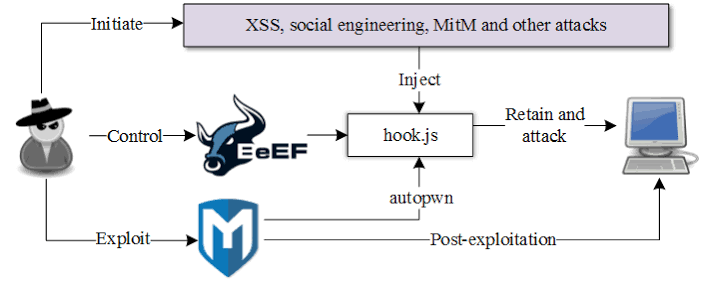
How Browser Exploitation Works (Concept Explained)
Browser exploitation generally focuses on abusing weaknesses in the client-side environment rather than directly attacking a server.
At a high level, the process involves several concepts:
1. Browser Interaction
A browser loads websites and executes content received from them. This includes HTML, CSS, JavaScript, and other resources.
If a vulnerability exists in a web application or browser environment, malicious code may sometimes influence browser behavior.
2. Client-Side Weaknesses
Client-side vulnerabilities are security problems that happen on the user’s device rather than the server.
Examples include:
- Poorly handled scripts
- Unsafe browser extensions
- Outdated software
- Weak security configurations
3. Browser Control Context
Security tools like BeEF study what can happen when a browser session is placed into a controlled testing environment.
The purpose is not simply to access a browser, but to understand:
- What information could become exposed
- What security controls are effective
- How organizations can improve protection
How BeEF Works Internally
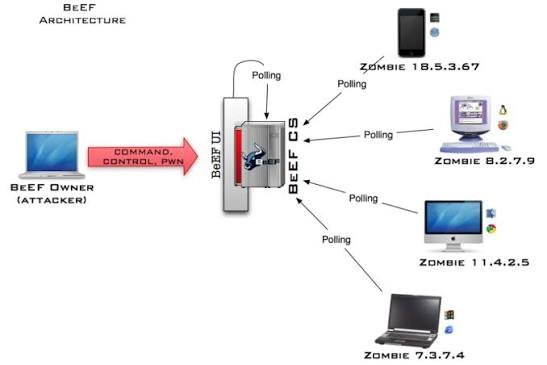
BeEF uses a concept commonly called a browser “hook.” In security testing, this refers to connecting a browser session to the BeEF framework so that researchers can analyze browser behavior in a controlled environment.
The BeEF architecture mainly consists of:
- User interface
- Communication server
- Browser sessions
- Command modules
The official BeEF documentation explains that the framework contains a user interface and communication server that manage communication with connected browser sessions.
User Interface
The interface allows authorized testers to view connected testing sessions and analyze available security modules.
It provides information about:
- Connected browsers
- Browser details
- Testing results
- Available assessment functions
Communication Server
The communication server manages communication between the framework and controlled browser environments.
It acts as the central component that handles requests and responses during security testing.
Command Modules
BeEF includes different modules designed for security assessment.
These modules help testers understand:
- Browser capabilities
- Security weaknesses
- Possible risk areas
The framework documentation describes these modules as part of BeEF’s approach to testing different browser contexts.
BeEF vs Traditional Penetration Testing Tools
BeEF is different from many popular security frameworks because it focuses on the browser.
| Security Tool Category | Main Focus |
|---|---|
| Network scanners | Finding network weaknesses |
| Server testing tools | Identifying server vulnerabilities |
| Web scanners | Testing websites and applications |
| BeEF | Evaluating browser-based security risks |
For example, a network scanner may identify an exposed service, while BeEF examines what security issues could exist from the perspective of a browser user.
Both approaches are valuable because modern attacks often involve multiple layers.
Common Security Problems Related to Browser Exploitation
Browser exploitation is often connected with broader security weaknesses.
Some common risk factors include:
Cross-Site Scripting (XSS)
XSS occurs when unsafe input handling allows unwanted scripts to run in a user’s browser context.
It remains one of the most important web security issues because it affects the relationship between websites and users.
Outdated Browsers
Old browsers may contain known security vulnerabilities.
Keeping browsers updated reduces exposure to previously discovered problems.
Unsafe Browser Extensions
Extensions can increase browser functionality but may also introduce additional security risks if poorly developed or malicious.
Weak Security Awareness
Human behavior remains an important security factor.
Examples include:
- Clicking suspicious links
- Installing unknown extensions
- Ignoring browser warnings
Legitimate Uses of BeEF Framework
BeEF is mainly used by cybersecurity professionals, researchers, and penetration testers.
Common legitimate purposes include:
Security Assessments
Organizations may use controlled testing environments to evaluate browser security.
Training and Education
Cybersecurity students use frameworks like BeEF to understand client-side security concepts.
Application Security Testing
Developers and security teams can analyze how web applications interact with browsers.
Security Research
Researchers may study browser behaviors and defensive techniques.
The BeEF project states that it is intended for lawful security research and penetration testing activities.
Limitations of BeEF
Although BeEF is a powerful security research framework, it is not a magical hacking tool.
Some limitations include:
Modern Browser Protections
Current browsers have improved security controls that prevent many older attack methods.
Dependence on Environment
Security testing results depend heavily on:
- Browser version
- Configuration
- Website security
- User permissions
Legal Restrictions
Using security tools against systems without authorization can violate laws and policies.
Security testing should always happen with proper permission.
How Organizations Can Protect Against Browser-Based Attacks
Protecting against browser exploitation requires multiple security layers.
Keep Browsers Updated
Regular updates fix known vulnerabilities and improve security protections.
Use Strong Web Security Practices
Developers should implement:
- Secure coding practices
- Proper input validation
- Content Security Policy
- Safe authentication methods
Manage Browser Extensions
Organizations should monitor and restrict unnecessary extensions.
Educate Users
Employees should understand:
- Phishing risks
- Suspicious downloads
- Unsafe websites
- Browser security warnings
Monitor Security Events
Security teams should use monitoring tools to detect unusual browser or application behavior.
BeEF Framework and Ethical Hacking
BeEF is an example of how cybersecurity tools can have different purposes depending on how they are used.
The same technology knowledge can help defenders:
- Find weaknesses
- Improve security controls
- Train security teams
But unauthorized access, testing without permission, or misuse of security tools can cause serious legal and ethical problems.
Ethical hacking requires:
- Permission
- Defined scope
- Responsible reporting
- Security improvement goals
Frequently Asked Questions About BeEF Framework
Is BeEF a hacking tool?
BeEF is a security testing framework. Like many cybersecurity tools, it can be used responsibly for penetration testing or misused without authorization.
What does BeEF stand for?
BeEF stands for Browser Exploitation Framework.
What is the main purpose of BeEF?
The main purpose of BeEF is to help security professionals evaluate browser security and client-side vulnerabilities.
Is BeEF used by cybersecurity professionals?
Yes. Security researchers and penetration testers may use BeEF in controlled environments to study browser security.
Is browser exploitation still relevant today?
Yes. Browsers remain a major part of digital activity, making browser security an important area of cybersecurity.
Final Thoughts
The BeEF Framework provides valuable insight into an often-overlooked part of cybersecurity: the browser. While many organizations focus heavily on servers and networks, the browser remains a critical security layer because it connects users with online services.
Understanding how browser exploitation works helps developers build safer applications, helps security teams identify risks, and helps users practice better security habits.
BeEF should be viewed as a learning and assessment framework rather than simply a hacking tool. When used ethically, it demonstrates why client-side security matters and why protecting browsers is an essential part of modern cybersecurity.